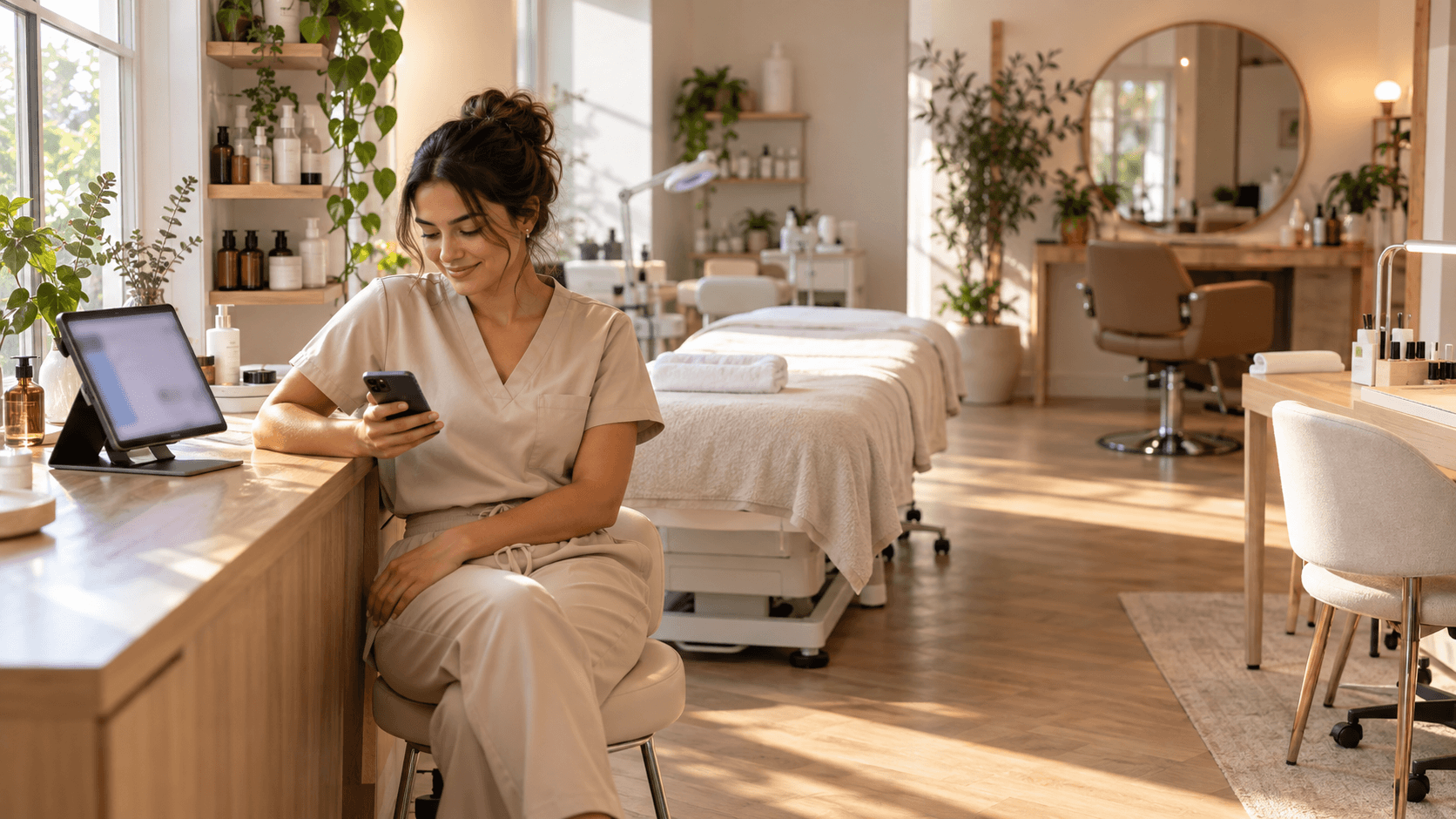
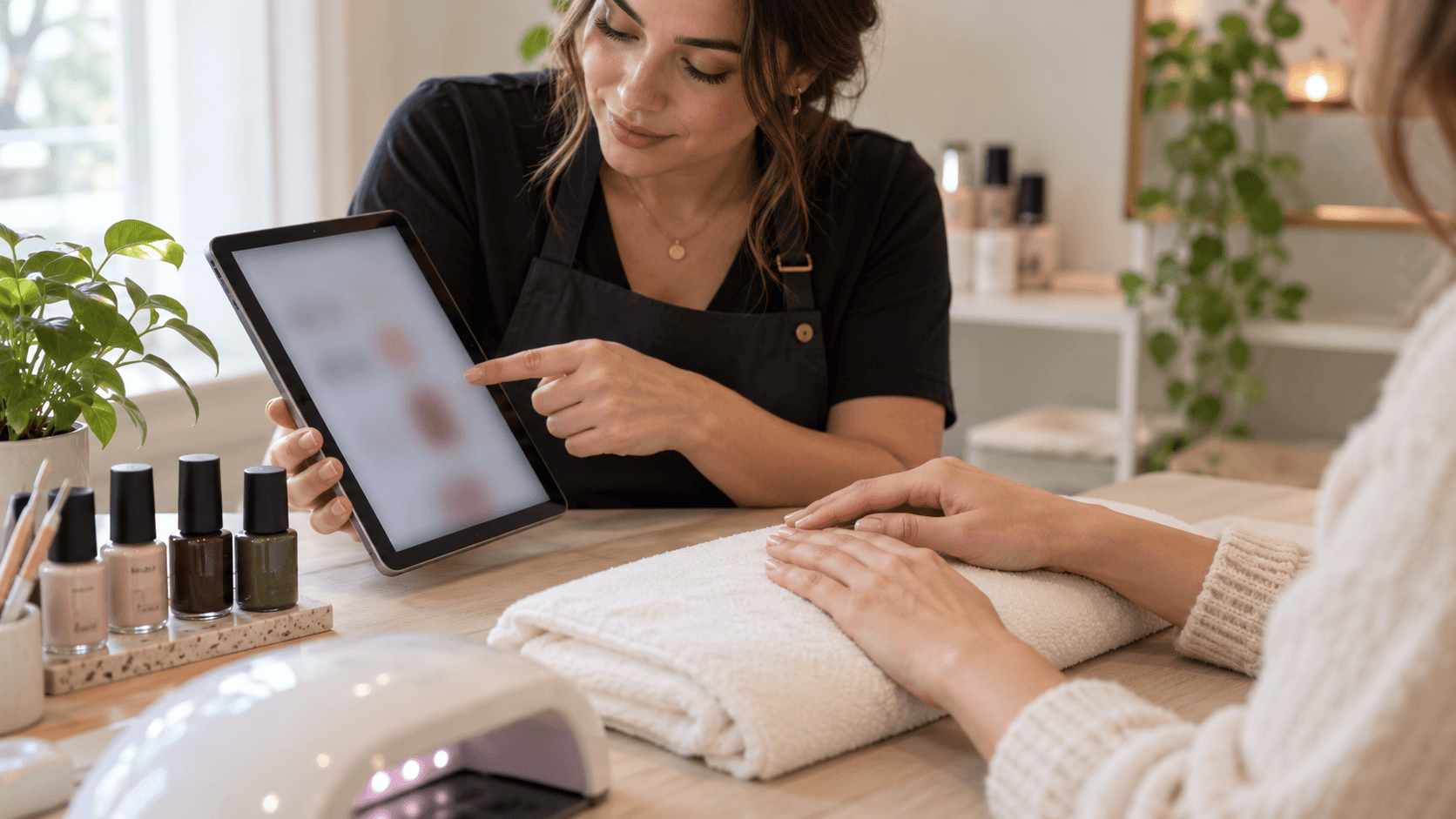
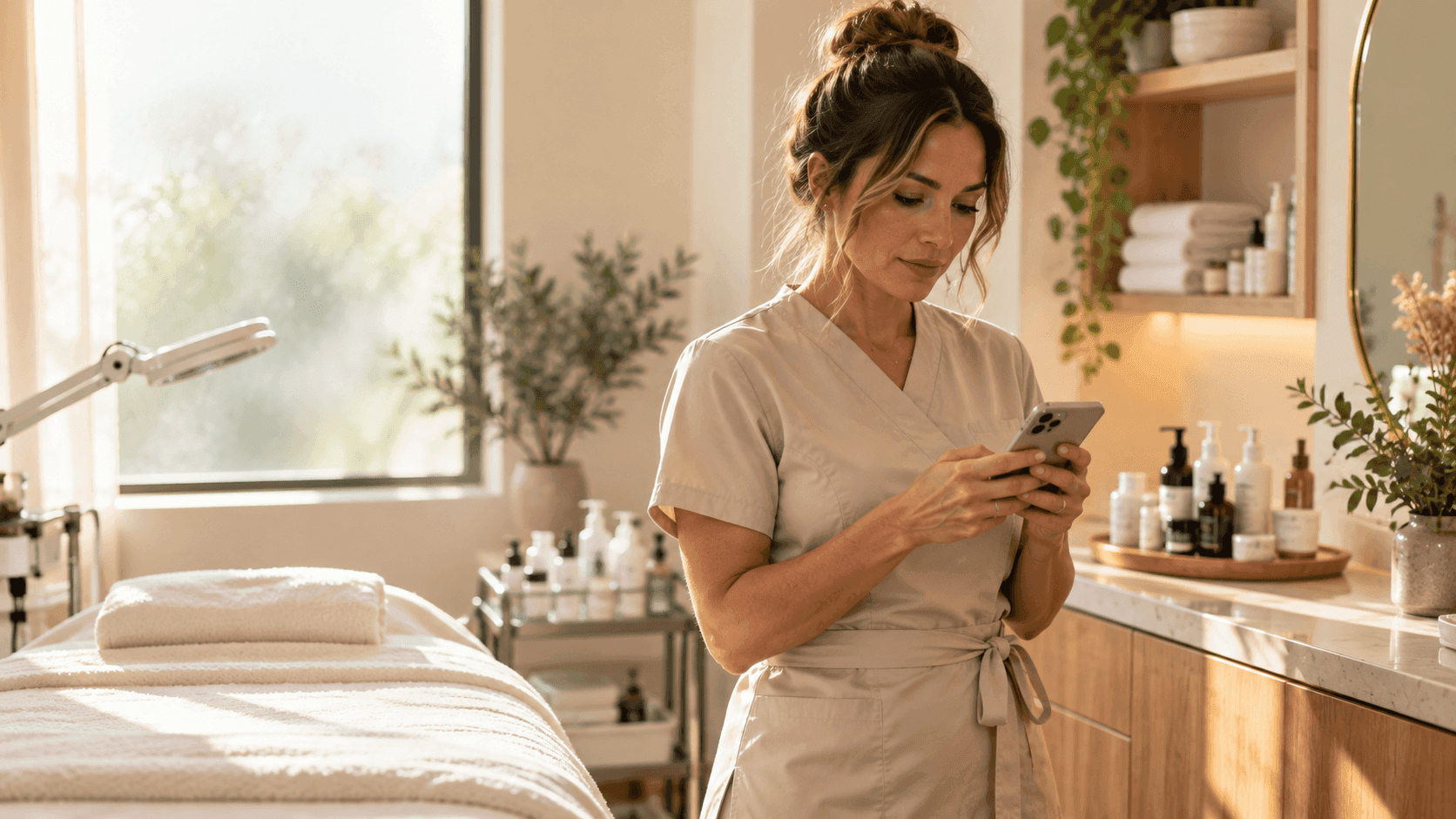
Beauty AI is artificial intelligence built into the tools beauty professionals use to run their business: booking, client records, intake and consent, client messages, marketing and visual consultations. Its job is to handle the work around the chair, the bed and the station, so the professional can spend more of the day on the part only a person can do.
That is the short answer. The rest of this guide is the long one, and it is written for the person who has to decide what to actually use.
I have spent more than eighteen years in this industry, as a licensed professional and an esthetics educator, and I now run ProBeauty AI, which is one of the tools in this category. So read the product sections with that in mind. I have tried to make everything else useful whatever you end up choosing.
This guide replaces our two 2026 guides. A lot changed this year, and most of what changed is more practical than anything we wrote in January.
What changed in 2026
Four shifts matter more than any individual feature.
Every platform got an AI receptionist, and they are not the same. By late 2026 nearly every major salon platform sells something it calls an AI receptionist. Some answer phone calls. Some only reply to texts or chat. Some book directly; some send the client a link. Which one you need depends entirely on how your clients reach you. We compared them in best salon software with AI features in 2027.
Your business moved into ChatGPT and Claude. This was the quiet big one. Beauty software can now connect directly to the general AI assistants people already use all day. ProBeauty AI is listed in both ChatGPT's and Claude's directories and works on their free plans, so you can ask "who's on my schedule tomorrow?" in the chat you already have open, and book a client from there. Guides: ChatGPT and Claude.
Image AI became good enough for consultations. Generating a realistic nail design, colour or style concept in seconds went from novelty to a genuine consultation tool, provided you know its limits. More in AI nail design generators.
"AI-powered" became a label, not a feature. It now appears on everything from booking apps to skin cameras to styling tools. Sometimes it means something. Often it does not. The questions later in this guide are how you tell.
The three kinds of beauty AI
Most confusion comes from three different things being called the same name.
- A general AI assistant. ChatGPT, Claude, Gemini. Extremely capable at writing and thinking, but it knows nothing about your clients or calendar unless you connect it to your business software.
- Salon software with an AI add-on. A booking platform that has added an AI feature, often a receptionist, sometimes at extra cost.
- An AI beauty suite. Software built around AI from the start, with booking, records, forms, messaging and marketing in one place, and the AI able to see all of it.
None is automatically better. A strong booking platform with one excellent AI feature can beat a suite that does many things adequately. But knowing which kind you are looking at makes every comparison easier.
What beauty AI can do
Here is each core use, what it is genuinely good for, and the honest limit.
Booking around the clock
A branded booking page that takes appointments at 11pm, knows your service durations and buffer time, collects deposits, and sends reminders. Strictly, most of this is good software rather than AI, but it is the foundation every AI feature sits on. If the booking setup is wrong, the AI books the wrong things faster.
Limit: it applies your rules to everyone, including the client you would have made an exception for. Set it up deliberately: how to set up online booking for your salon.
Answering clients and handling requests
An AI receptionist answers the questions you get forty times a week, such as prices, policies, parking and availability, and handles booking requests, at any hour.
Limit: it cannot read a room, comp a botched colour, or calm an upset regular. Whether you still need a person is covered honestly in AI receptionist vs front desk staff.
Intake, consent and contraindications
AI form builders create intake and consent forms for specific treatments, send them before the appointment, capture a dated signature, and attach the result to the client record.
Limit: a form that is well built is not the same as one that covers your scope. Requirements vary by state and license. Treat AI-built forms as a strong starting point and confirm with your state board. More in digital intake forms.
Client records that remember
Visit history, formulas, notes, photos and consent in one profile, with AI that can summarize what happened last time before the client sits down.
Limit: the AI is only as good as what you write down. A note written during the buffer beats a perfect system you update on Sundays. Where those records should live: where to store client notes and consent forms.
Visual concepts
Hair colour ideas, nail designs, lash styles and makeup looks, generated as realistic images for consultations and content.
Limit: the AI does not know her hair, her nail beds or her skin. It shows the design, not the result on her. Check every concept against what you can actually execute, and label AI concepts when you post them.
Marketing and content
Captions, emails, campaigns, promotions and graphics, drafted in your voice from your actual services.
Limit: AI writes a fine first draft and a bland final one. The edit is where your personality goes back in. See social media marketing for salons and spas and email marketing for beauty professionals.
A business advisor on call
Pricing questions, treatment protocols, how to word an awkward client text, what to do about a slow January. A beauty-specific assistant answers with industry context rather than generic office advice.
Limit: it is a sounding board, not an accountant, a lawyer or your state board. For anything regulated, verify.
What beauty AI cannot do
Worth saying plainly, because some marketing implies otherwise.
- It cannot do the service. No AI performs a facial, places a lash or cuts a bob.
- It cannot build the relationship. Clients rebook because of how you made them feel. AI can remind them to come back. It cannot give them a reason to.
- It cannot take responsibility. Consent, contraindications, licensing and pricing decisions stay yours.
- It cannot fix a broken process. Automating a messy booking setup gives you a faster mess.
How to judge any beauty AI tool
Whatever you are looking at, these questions sort real capability from marketing.
1. What exactly does the AI decide? Drafting a message, booking an appointment, scoring skin, changing a setting? The more it acts on its own, the more you need the next answer.
2. Can you check it and override it? You should be able to review, pause, limit what it can do, and take over any conversation.
3. What can it see? An assistant that knows a client's history is far more useful than one that only knows your opening hours. It also means you need to know where that data goes.
4. Is your data used to train AI models? Ask directly, get the answer in writing. ProBeauty AI does not sell client data or use it to train AI models.
5. Can you get your data out? Export matters. A platform you cannot leave can raise its price indefinitely.
6. What is the real monthly cost? Base plan, AI add-ons, usage limits, text message fees and payment processing. For a solo pro the subscription is often the smallest of those. We worked through this in best booking apps for solo beauty pros.
7. Does it work where you already are? If you live in ChatGPT or Claude, a tool that connects there will get used. One that needs its own tab might not.
Privacy and client data
Two things are true at once.
Beauty AI platforms can be very secure, and the reputable ones encrypt data, give each person their own login, and do not sell client information.
And you remain responsible for the health information your clients give you. Whether specific regulations such as HIPAA apply to your business depends on what you do and how you operate, and that is not something to conclude from a blog post, including this one. If you handle health history at any scale, check with your state board and with someone qualified to advise you.
What you say in ChatGPT or Claude is handled under OpenAI's or Anthropic's terms. Both let you control whether your conversations are used to improve their models. Worth checking in their settings whether or not you connect any business tools.
Beauty AI by role
Salon and spa owners use it to keep a team's book full, reduce no-shows and keep client communication consistent across providers. AI tools for salon owners and AI tools for spa owners.
Estheticians lean on intake, consent, skin records and treatment planning. AI tools for estheticians and the AI esthetician guide.
Med spas need consent and records above everything else. AI tools for med spas.
Hairstylists use colour concepts, rebooking and content. AI tools for hairstylists.
Nail techs use design concepts and booking. AI tools for nail techs and AI nail design generators.
Lash artists use intake, patch test records and fill reminders. AI tools for lash artists.
Makeup artists live in DMs and bridal inquiries. AI tools for makeup artists and the AI receptionist guide for makeup artists.
Beauty schools and students use AI for lesson planning, exam prep and practice tests. Technology in cosmetology education.
Getting started, in order
Do not try to automate everything at once. This order works because each step makes the next one more useful.
1. Booking and reminders. Get the booking page right, with honest durations, buffers and a deposit policy. This is the foundation.
2. Intake and consent. Attach forms to the services that need them so they go out automatically before the appointment.
3. Client records. Start writing notes into a real profile, during the appointment or the buffer after it.
4. AI assistance. Now let AI draft the follow-ups, captions and replies, because it has your services and your history to work from.
5. Connect your assistant. If you already use ChatGPT or Claude, connect your business to it, and check your day from the chat you already have open.
If you are starting a business from scratch, pair this with how to start a beauty business and how to price your beauty services.
Beauty AI FAQ
Will AI replace beauty professionals?
No. AI cannot perform a service or build the trust that keeps a client coming back for years. It takes over admin like scheduling, forms, reminders and first drafts, so professionals spend more of their time with clients.
Can I just use ChatGPT or Claude?
Yes, and now you can use them for more than writing. On their own they do not know your business. Connected to beauty software, they can read your schedule, look up clients and book appointments. ProBeauty AI connects to both, including on their free plans.
Do the ChatGPT and Claude connections work on free plans?
For ProBeauty AI, yes. Both list it in their directories, and both work on their free plans. Booking and rescheduling through them need a ProBeauty AI Essential or Pro plan.
How much does beauty AI cost?
It varies widely, and AI features are increasingly sold as add-ons, so compare total monthly cost rather than the headline price. For reference, ProBeauty AI Essential is $19.99 a month, or $20 once for your first six months on the current offer with nothing further until month seven. Pro is $29.99 a month.
Is client data safe?
It depends on the platform. Ask whether data is encrypted, who can access it, whether it is used to train AI models, and whether you can export it. Get the answers in writing.
What is the difference between beauty AI and ProBeauty AI?
Beauty AI is the category: artificial intelligence applied to beauty businesses. ProBeauty AI is one platform in it, an AI beauty suite for beauty professionals that combines booking, client records, AI intake and consent forms, an AI assistant and image studio, and works inside ChatGPT and Claude.
Where ProBeauty AI fits
What we do: booking with a branded page, deposits and SMS reminders; client records with history and notes; AI intake and consent forms built for the state you practice in, with signatures; Gia, an AI assistant that knows your services and books, moves and cancels appointments; an AI image studio; team tools on Pro; English and Spanish; iPhone, iPad and web; and connections to ChatGPT and Claude.
What we do not do, yet: answer phone calls, sell gift cards, send you new clients from a marketplace, or run on Android. If one of those is your deciding factor, choose accordingly.
Your beauty AI library
Choosing software
Connecting your AI assistant
Running the business
Looking ahead
The bottom line
Beauty AI in 2027 is not one tool. It is a set of jobs, booking, answering, remembering, documenting and drafting, that software can now do well enough to take off your plate.
Start with the foundation, booking and records, because every AI feature is only as good as the information under it. Ask hard questions of anything labelled "AI-powered." And if you already spend your day in ChatGPT or Claude, connect your business to it, because the best tool is the one you will actually open.
You bring the craft and the relationships. Let the software handle what happens around them.
ProBeauty AI is an AI beauty suite for beauty professionals: booking, client records, AI intake and consent forms, an AI assistant and image studio, and it works inside ChatGPT and Claude. You focus on the human touch. We'll handle the rest. Get started free.