Every year someone publishes a list of the devices that will define the next twelve months, and every year most of it is a trade show booth with better lighting.
So this one is built differently. Nobody can tell you which machine will be the one everyone wants in 2027. What can be described honestly is what is already in motion: the shifts in what clients expect, how equipment is sold, what your body can take, and what your license actually lets you operate. Those move slowly, which is exactly why they are worth planning around.
If you read our 2026 equipment trends guide, think of this as the sequel. That one covered what people were buying. This one covers what is changing underneath the buying, and how to make a decision you will not regret in eighteen months.
The five shifts behind 2027
Before the categories, the forces. Almost every trend below is one of these playing out in a specific room.
Home devices raised the floor. LED masks, microcurrent wands and at-home peels are everywhere now. That does not kill professional treatments, but it changes what a professional device has to justify. If a client can get a similar result on her couch, your version needs to be meaningfully stronger, safer, or more expertly delivered.
The sale is moving from the machine to the subscription. More equipment now arrives with proprietary cartridges, serums, tips or software licences that only work with that one system. The sticker price is the start of the cost, not the cost.
Bodies are the bottleneck. The professionals who last are the ones whose backs, wrists and lungs last. Ergonomics and air quality have moved from nice to have into the core of a buying decision.
Licensing has not caught up with the devices. Energy-based equipment keeps getting more powerful and more widely sold, while what each license allows still varies state by state. Buying a device you are not permitted to operate is one of the most expensive mistakes in this industry.
"AI-powered" is now a sticker, not a feature. It appears on cameras, skin analyzers, styling tools and software. Sometimes it means something. Often it means a marketing budget.
Skin and esthetics
Professional devices have to beat the home version
The biggest change in esthetics is not a device. It is that clients now arrive with their own.
What that means for buying: favour equipment that does something a home device cannot, either because of power, precision, or the professional judgment needed to use it safely. Treatments built on expertise, combination protocols and real assessment hold their value. Treatments a client could reasonably replicate with a retail gadget are under pressure, however good the machine looks.
There is an upside too. A client who uses LED at home is primed to understand why your treatment works. Retailing a home device as maintenance between visits can deepen the relationship rather than replace it, provided you are the one who chose it for her.
Skin analysis and imaging
Cameras and analyzers that photograph the skin under consistent light, and sometimes map concerns like pigmentation or texture, are becoming common in consultation rooms.
The genuine value is consistency. The same light, the same angle, the same distance, visit after visit, gives you a record you can actually compare, which is the strongest retention tool in esthetics. Be more cautious about software that produces a score or a "skin age." Ask how it was validated, and treat its output as a conversation starter rather than a diagnosis.
For what is trending on the treatment side rather than the equipment side, see skincare treatment trends.
Combination platforms
Single devices that switch between several modalities keep spreading, because space and capital are both limited. They make sense when you will genuinely use most of the modes. They are a poor deal when you are paying for five functions to use one. Before you buy, write down the treatments you will offer in the first six months. If that list only uses one mode, buy the single device.
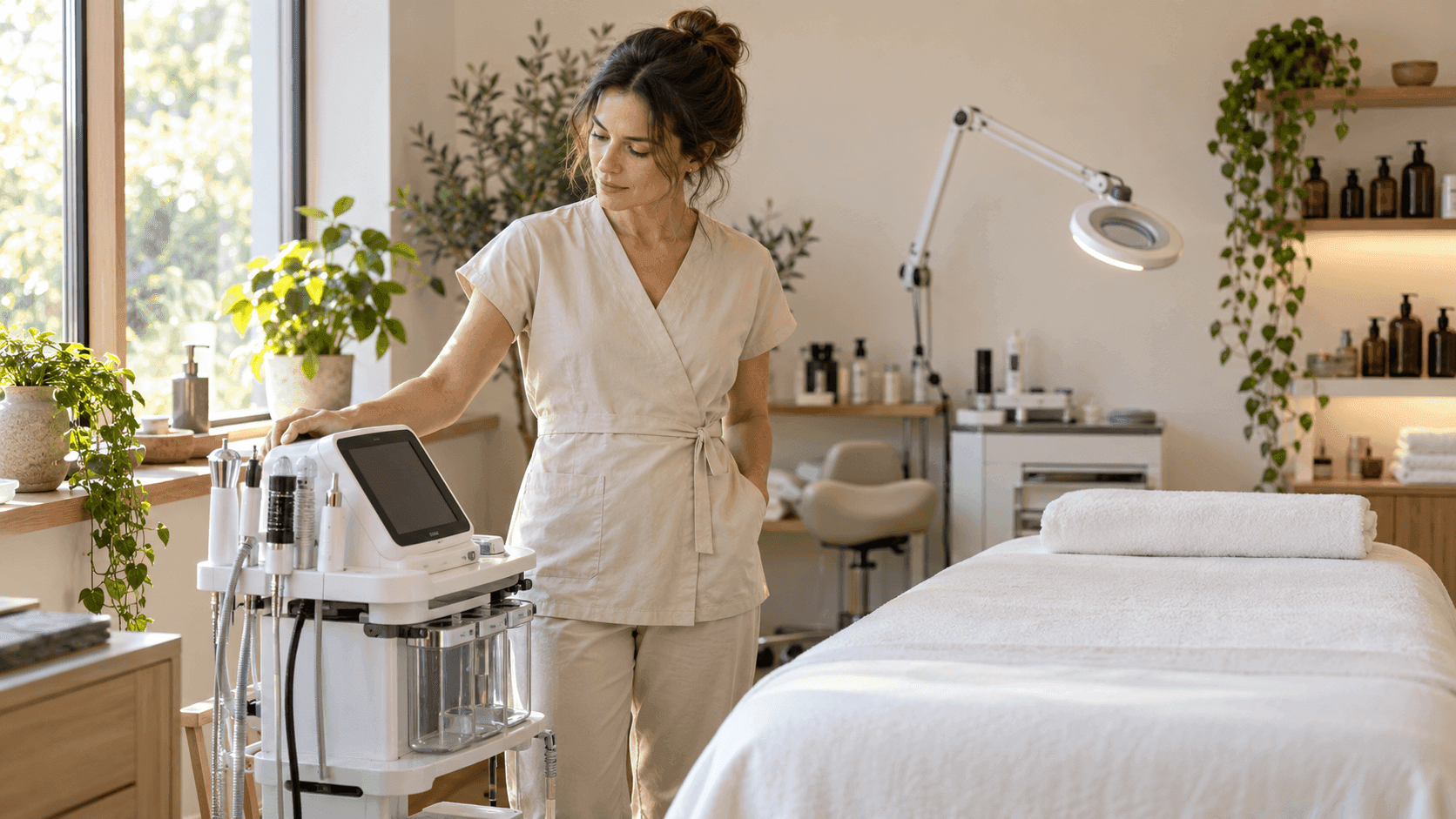
Med spa and energy-based devices
This is where the money and the risk are both highest.
Check your license before you check the price
Radiofrequency, lasers, IPL and other energy-based devices are sold more widely than ever, sometimes directly to people whose license does not cover operating them. Rules on who can use which devices, and under what supervision, vary by state and by license type, and a sales rep is not the person who should answer that question for you.
Before any energy-based purchase, get two answers in writing:
- From the manufacturer: what the device is cleared or approved for, and for which uses
- From your state board: whether your license lets you operate it, and whether medical supervision is required
If either answer is vague, stop. For the wider picture of running a medical aesthetics practice, AI tools for med spas covers the operational side.
Settings records matter as much as the device
As devices get more configurable, the record of what you did gets more important. Which settings, which depth, which passes, which client, which date, and what she consented to. If something goes wrong, that record is your protection, and if it goes right, it is how you repeat it.
Keep those notes with the client and the consent, not on a sticky note or in the device's own memory. Our guide to where to store client notes and consent forms covers why that matters.
Financing, leasing and used equipment
High-end devices are increasingly sold on financing, leases or monthly programs. That can be the right way to start, but read what happens at the end of the term, who owns the device, and whether the consumables are locked to that program.
The used and refurbished market is growing for the same reason. It can be a genuine saving. It can also mean no warranty, no manufacturer training, outdated software, and in some cases a device the manufacturer will not service. Ask for the service history, and confirm the manufacturer will support it under your name before you pay.
Hair
Lighter, cordless and gentler on the stylist
Hair equipment trends are mostly about the person holding the tool. Lighter dryers, cordless irons with better battery life, and shears designed around wrist and thumb position are all aimed at the same problem: a stylist doing the same motion thousands of times a week.
The test is simple. Hold it for as long as you actually would in a working day, not for thirty seconds at a booth. If your wrist or shoulder notices at the end of a demo, it will notice a great deal more by Saturday.
Heat that is controlled, not just high
Tools with more precise temperature control continue to replace tools that simply run hot. That matches what clients increasingly ask about: damage, bond health, and whether their hair will survive the style. Precise control is worth paying for. A higher maximum temperature usually is not.
Wash stations
Shampoo bowls are being chosen for the client's neck and the stylist's back rather than just the look of the room. Adjustable height and better neck support are what to look for. If you are fitting out a salon, sit in the bowl yourself for five minutes before you order eight of them.
More on the tools side in AI tools for hairstylists.
Nails
Air quality moves to the centre
The single most important nail equipment trend is not decorative. It is ventilation.
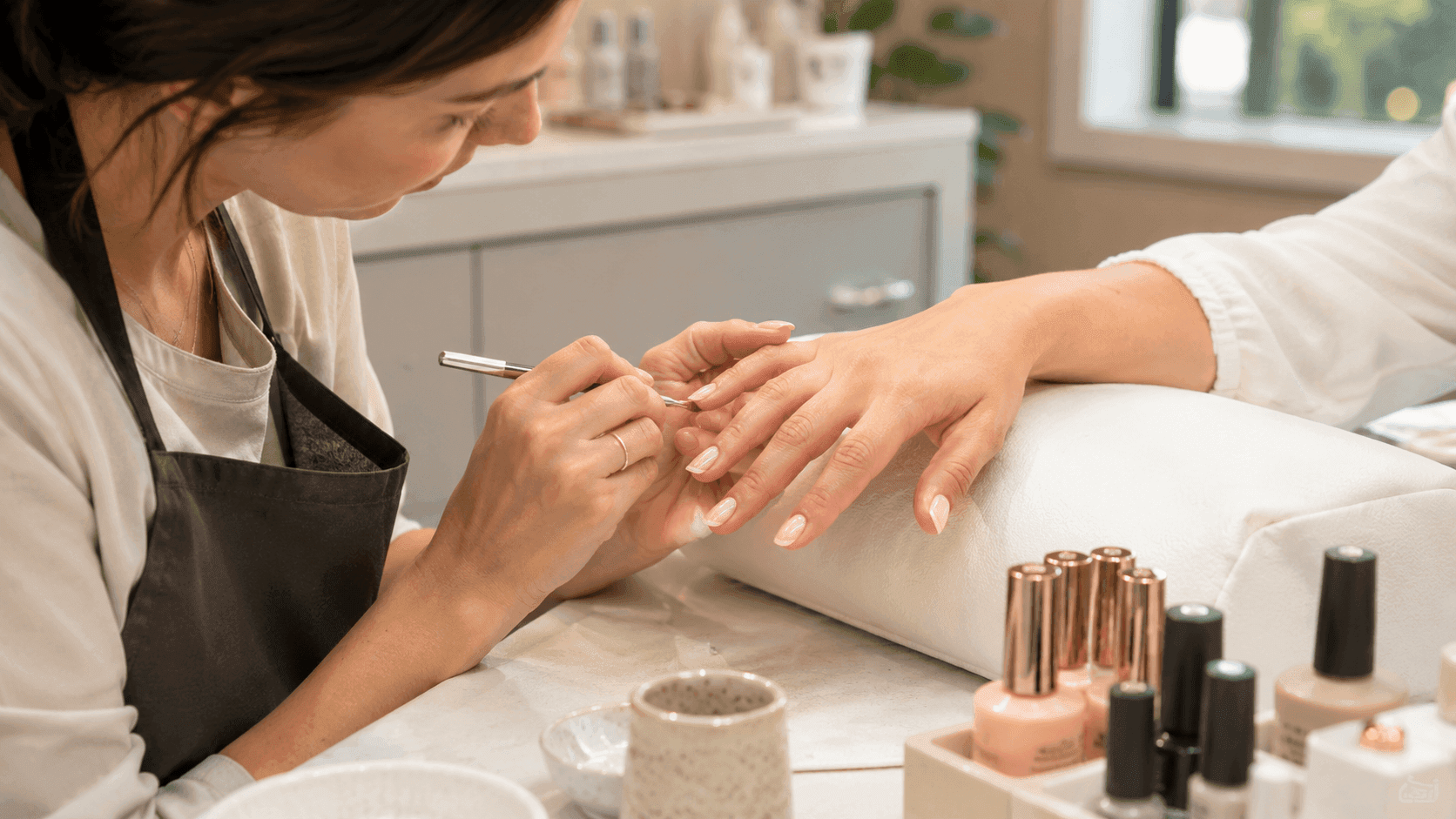
Nail work produces dust from filing and vapours from acrylics, gels and solvents, and the people breathing it most are the techs, all day, every day. The direction of travel is toward source capture: extraction at the table that pulls dust and vapour away from your breathing zone, rather than a single air purifier in the corner of the room. OSHA publishes guidance for nail salons on ventilation and safe working practices, and it is worth reading before you buy anything.
When you compare extraction systems, ask where the air goes, how often filters need changing and what they cost, and how loud it is. A system you switch off because it is noisy protects nobody.
E-files and dust management
Electric files keep getting quieter, lighter and better balanced, and dust collection is increasingly built into the work surface. Pair any e-file purchase with a plan for the dust it produces.
Lighting and magnification
Better task lighting and magnification for detailed art reduce eye strain and hunching, which reduces neck pain. It is a small purchase with a long payoff. For design tools on the digital side, see AI nail design generators.
Lashes and brows
Beds and stools built for long sessions
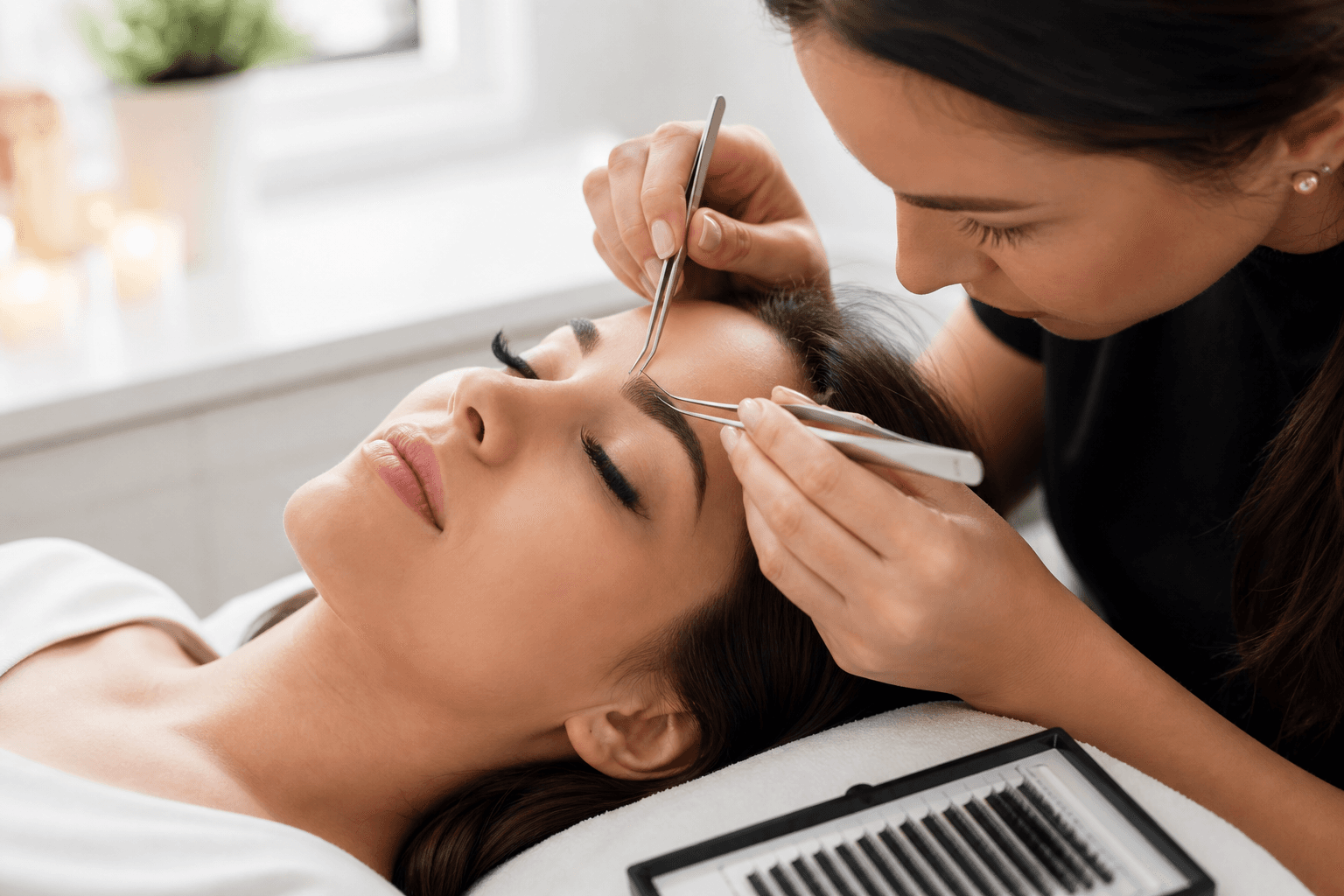
A full lash set means hours in a fixed posture. Height-adjustable beds, supportive stools and positioning that keeps your arms close to your body are the whole game here. This is the category where ergonomics stops being a theme and becomes a career-length question.
Environment control
Lash adhesive is sensitive to humidity and temperature, which is why hygrometers and humidifiers have become standard kit for lash artists who want consistent retention. Controlling the room is cheaper than redoing sets.
Magnification and light
Lash lamps and magnifying glasses that reduce eye strain continue to improve. Look for light that is bright without being harsh on the client's closed eyes.
More in AI tools for lash artists.
The business layer
Not equipment in the physical sense, but it decides whether the physical equipment pays for itself.
Booking that knows your equipment. If a device can only be in one room, or a service needs a specific machine, your booking system needs to know that, or you will double-book the one thing you cannot share.
Records that attach to the treatment. Settings, photos, consent and notes, stored against the client and the visit. Covered above, and it is the thing most practices bolt on too late.
Intake before the device comes out. Contraindications matter more as devices get more powerful. Forms filled in before the appointment, with health history and signed consent, are part of the safety system, not paperwork. See digital intake forms.
This is the part ProBeauty AI does. We do not sell equipment and have no stake in which device you choose. What we handle is around the treatment: online booking with real service durations and buffer time, deposits, the client record with notes and photos, intake and consent forms, and reminders. If you need the system to manage specific rooms or machines, check that with any platform you consider, us included, before you rely on it. Essential is $19.99 a month, or $20 once for your first six months on the current offer, with nothing further until month seven.
How to judge a purchase in 2027
Whatever category you are buying in, the same questions sort good decisions from expensive ones.
Work out the real cost of ownership
Add up, over two or three years:
- The purchase or financing cost
- Consumables, especially anything proprietary that only works with this device
- Servicing, repairs and downtime
- Training and any certification you need to keep current
- Insurance changes
Then divide by the number of treatments you realistically expect to sell, not the number the rep projected. If the cost per treatment does not leave a healthy margin at your real prices, it is not an investment yet. If your service prices need rethinking first, how to price your beauty services walks through it.
This is the same principle as choosing software. The monthly fee is rarely the biggest number, which we covered for booking tools in best booking apps for solo beauty pros.
Test the "AI-powered" claim
When a device or app says it uses AI, ask three questions:
- What exactly does the AI decide? Adjusting a setting, scoring skin, suggesting a protocol?
- Can you override it? You should always be able to.
- How was it validated? On what kinds of skin, hair or clients, and by whom?
If the answers are vague, you are paying for the word, not the capability.
Ask what happens if the company disappears
Proprietary consumables and cloud-connected devices are only as durable as the company behind them. Ask whether the device works without the subscription, whether consumables are available from anyone else, and what happens to your data if you stop paying.
Buy for your body as well as your menu
If a piece of equipment makes you work in a worse posture or breathe worse air, it carries a cost that never shows up on the invoice. Our guide to avoiding burnout as a beauty professional is about the wider version of this, and equipment is a bigger part of it than most people expect.
Where to start if you are buying in 2027
New professionals: a good bed or chair, a good stool, good light, and software that books and records properly. Hold off on high-end devices until you have the clients and the training to fill them.
Established solo professionals: one device that enables a service clients cannot get at home, chosen against your real cost per treatment. Fix ergonomics and air quality before adding anything shiny.
Salon and spa owners: shared equipment that multiple staff are trained on, booking that understands which rooms and devices each service needs, and a records system that keeps settings and consent with the client.
Anyone considering energy-based devices: your state board's answer comes before the sales conversation, not after it.
The bottom line
The 2027 equipment story is less about any one machine and more about how carefully it is bought. Devices are more powerful, more often sold on subscription, and more often marketed with claims that need checking. Meanwhile the oldest truths in the industry have not moved: your body is the most important equipment you own, and the record of what you did matters as much as the tool you did it with.
Buy what your license allows, what your clients cannot get at home, and what your body can use for years. Work out the real cost per treatment before you sign anything. Everything else is trade show lighting.
ProBeauty AI handles the booking, client records, intake and consent around your treatments, so the equipment you invest in is booked properly and documented properly. You focus on the human touch. We'll handle the rest. Get started free.