The equipment beauty professionals use has never evolved faster. What was cutting-edge in 2023 is now standard. What was experimental in 2024 is now expected. And what's emerging in 2026 will shape the next decade of the industry.
For salon owners, spa operators, estheticians, and beauty professionals planning equipment investments, understanding what's actually trending — and what's worth investing in — is critical. The wrong equipment investment can cost tens of thousands. The right one can transform your business and pay for itself in months.
This guide covers the most significant beauty industry equipment trends shaping 2026, what's driving them, and what to consider before investing.
Why Equipment Trends Matter More Than Ever
The beauty industry equipment landscape has shifted dramatically. Three forces are driving the change:
Client expectations: Clients now research treatments before booking. They expect modern equipment, advanced technology, and visible innovation. A facial bed from 2010 doesn't inspire confidence in 2026.
Treatment evolution: New treatments require new equipment. Demand for advanced services like microneedling, LED therapy, and lymphatic drainage has driven equipment innovation across categories.
Competition: Beauty professionals competing for clients increasingly differentiate through technology and equipment. Premium equipment justifies premium pricing.
Worker wellness: Burnout in the beauty industry is at record levels. Ergonomic, body-friendly equipment is no longer optional — it's career preservation.
Now let's dive into what's actually trending.
1. Advanced Skincare Devices
Skincare technology continues to lead beauty equipment innovation in 2026.
LED Light Therapy Devices
Once considered specialty equipment, LED therapy is now standard in modern esthetics practices.
What's trending:
- Multi-wavelength panels that combine red, blue, near-infrared, and yellow light in single treatments
- Hands-free LED masks that allow estheticians to continue with other work during treatment
- Combination devices that pair LED with other modalities (microcurrent, oxygen)
- Take-home LED devices that estheticians retail to clients for between-treatment maintenance
Why it's trending:
Research continues to validate LED's effectiveness for acne, anti-aging, and inflammation. Clients are increasingly aware of the technology, and treatment add-ons of $50-100 add meaningful revenue per appointment.
Investment range: $500-$15,000 depending on size and capabilities
Microneedling Devices
The microneedling category has matured significantly.
What's trending:
- Automated pen-style devices with adjustable depth and speed
- RF (radiofrequency) microneedling combining needles with thermal energy for stronger results
- Hydrating microneedling systems that simultaneously deliver serums
- Single-use sterile cartridges as the safety standard
Why it's trending:
Microneedling treatments command $200-$600 per session, with strong client demand for collagen induction without aggressive lasers or chemical peels. RF microneedling is particularly hot in med spa settings.
Investment range: $1,000-$50,000+ for clinical-grade RF systems
Hydrofacial-Style Devices
The "facial machine" category has exploded.
What's trending:
- Multi-function devices combining hydrodermabrasion, extractions, infusion, and oxygen
- Branded systems with proprietary serums and consistent protocols
- Compact options for solo estheticians and home-based practices
- Mobile-friendly devices that can travel for events
Why it's trending:
These devices enable signature, brandable services that command premium pricing ($150-$300+) and create instant Instagram content. The visible results sell themselves.
Investment range: $5,000-$30,000
Ultrasonic and Microcurrent
Long-standing technology is getting renewed attention.
What's trending:
- Combination ultrasonic/microcurrent units in single treatment platforms
- Improved aesthetics of devices (sleeker, more professional looking)
- Pro and home device pairings for client retention
- Microcurrent training as a continuing education focus
Why it's trending:
These technologies offer non-invasive lifting and skin improvements that fit perfectly with the wellness-focused, "natural results" trend.
Investment range: $200-$5,000
2. Smart Salon Technology
Beyond hands-on treatment equipment, the technology running the business itself is evolving rapidly.
AI-Powered Business Management Platforms
This is where the biggest operational transformation is happening.
What's trending:
- All-in-one platforms that combine booking, CRM, intake forms, and AI assistants
- AI-generated marketing content for social media and client communications
- Automated client follow-ups that reduce no-shows and improve retention
- Predictive analytics for booking patterns, revenue forecasting, and inventory
Why it's trending:
AI tools for beauty professionals save 8-15 hours per week of administrative work — time that can be redirected to revenue-generating activities or rest. The ROI is clear and immediate.
Investment range: $30-$300 per month per professional
Smart Booking and Scheduling Systems
The days of paper appointment books are over.
What's trending:
- 24/7 online booking with custom branded pages
- Automated SMS reminders that significantly reduce no-shows
- Deposit collection for high-value services
- Capacity optimization that maximizes daily revenue
Why it's trending:
Clients expect to book at midnight on Sunday from their phone. Businesses without online booking lose clients to those that have it.
Investment range: Often included in business management platforms ($30-$150/month)
Digital Intake and Consent Forms
Paper forms are increasingly seen as a liability and inconvenience.
What's trending:
- AI-generated forms customized to specific treatments
- Mobile-friendly completion before clients arrive
- Integrated client records with treatment history
- Digital signatures with timestamp validation
Why it's trending:
Digital intake forms protect against liability, save time, and create more professional client experiences.
Client Photography Setups
Documentation has become serious business.
What's trending:
- Standardized lighting setups for consistent before/after photography
- Dedicated photo zones in treatment rooms
- Phone-based systems with professional lighting and apps
- AI photo enhancement for marketing-ready images
Why it's trending:
Visual documentation drives social media marketing, builds portfolios, and provides treatment progress evidence for clients. Plus, before/after content remains the highest-performing social media content for beauty professionals.
Investment range: $200-$3,000
3. Ergonomic and Wellness-Focused Furniture
The career-killing physical toll of beauty work is finally driving equipment innovation.
Treatment Beds and Chairs
What's trending:
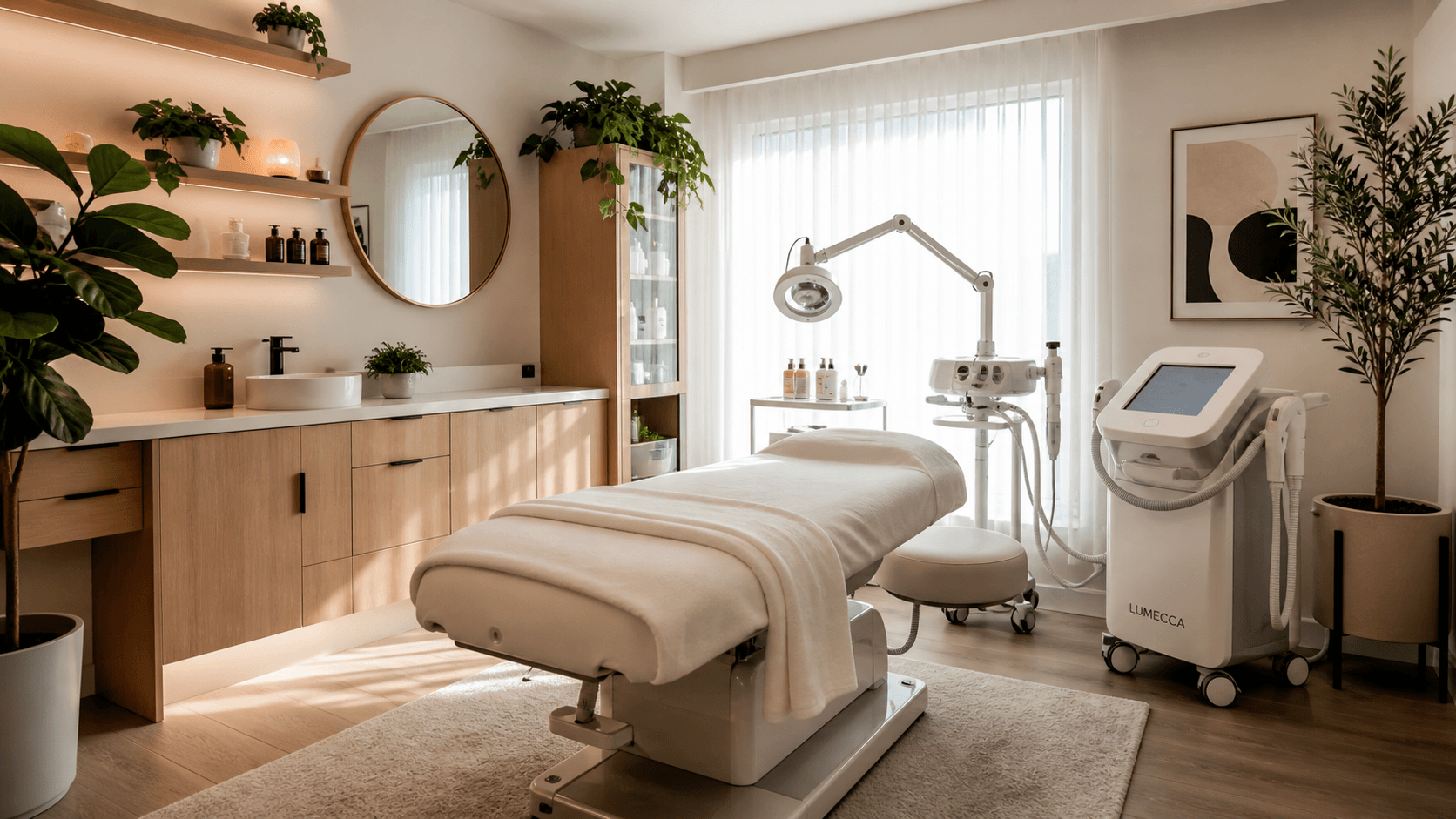
- Electric height-adjustable beds that reduce esthetician back strain
- Multi-position chairs for diverse services without buying multiple pieces
- Heated and massage features as client experience differentiators
- Antimicrobial materials that meet evolving sanitation standards
Why it's trending:
Estheticians are leaving the industry due to chronic back, neck, and shoulder injuries. Ergonomic equipment is increasingly viewed as career insurance, not luxury.
Investment range: $1,500-$10,000
Stylist Stools and Chairs
The seemingly small purchase that protects bodies for decades.
What's trending:
- Saddle stools that promote better spine alignment
- Ergonomic backrests for extended sitting
- Adjustable height ranges that fit any treatment scenario
- Quality casters that move smoothly for years
Investment range: $200-$1,500
Anti-Fatigue Mats
Small investment, massive impact.
What's trending:
- Beauty-industry-specific designs that resist nail polish, products, and chemicals
- Premium materials that last years of daily use
- Edge-tapered designs that won't trip you or clients
Investment range: $50-$300 per mat
4. Sustainability-Focused Equipment
Eco-consciousness has moved from nice-to-have to expectation.
Energy-Efficient Equipment
What's trending:
- LED-based devices replacing older fluorescent technology
- Energy Star-rated washers and dryers for towels and linens
- Programmable thermostats for treatment rooms
- Variable-speed equipment that uses only the energy needed
Why it's trending:
Operating costs continue to climb. Energy-efficient equipment lowers monthly bills while supporting sustainability claims that increasingly matter to clients.
Refillable and Reusable Systems
What's trending:
- Bulk product dispensers instead of single-use containers
- Refillable retail systems that reduce packaging waste
- Steam cleaners replacing chemical sanitizers where possible
- Reusable headbands and capes with industrial laundry partnerships
Why it's trending:
Younger clients in particular increasingly notice and reward businesses that minimize waste.
Water-Efficient Fixtures
What's trending:
- Low-flow faucets and shampoo bowls that use 30-50% less water
- Tankless water heaters for instant hot water without standby loss
- Recirculating systems for steamers and other equipment
Why it's trending:
Water costs are rising in many markets, and sustainability matters to clients and regulators alike.
5. Hair Industry Equipment Trends
Beyond skin, hair professionals are adopting new equipment too.
Advanced Color Equipment
What's trending:
- AI-assisted color matching systems and apps
- Foil dispensers and color stations for organized efficiency
- Heat-resistant color processing equipment
- Built-in extraction systems for chemical fume management
Smart Styling Tools
What's trending:
- Temperature-regulated tools with precise heat control
- Cordless styling tools with longer battery life
- Multi-purpose devices that replace several tools
- Tools optimized for specific hair types rather than one-size-fits-all
Wash Stations
What's trending:
- Spa-style massage shampoo bowls as a service differentiator
- Adjustable-height bowls for ergonomics and accessibility
- Premium materials matching modern salon aesthetics
- Integrated water filtration for hair health benefits
6. Med Spa and Advanced Aesthetic Equipment
The med spa segment continues to grow rapidly, driving high-end equipment innovation.
Laser and IPL Systems
What's trending:
- Multi-platform devices that combine multiple laser types
- Pain-free options that don't require numbing
- Faster treatment times that allow more clients per day
- AI-assisted parameter adjustment for safer, more effective treatments
Investment range: $30,000-$200,000+
Body Contouring Equipment
What's trending:
- Non-invasive fat reduction devices (cryolipolysis, ultrasound, radiofrequency)
- Muscle stimulation systems for body sculpting
- Combination platforms offering multiple modalities
- Cellulite reduction technology with measurable results
Investment range: $20,000-$150,000
Injectable Support Equipment
What's trending:
- Improved injection chairs for client comfort
- Better lighting setups for precise injectable work
- Refrigeration systems designed for product storage
- Documentation systems for medical records
How to Make Smart Equipment Investments
With so many options, how do you decide?
The ROI Framework
For any major equipment purchase, calculate:
Revenue impact:
- New services this enables
- Premium pricing this justifies
- Client retention improvements
- Referral and marketing value
Cost analysis:
- Initial investment
- Financing costs if applicable
- Consumables and maintenance
- Training and certification
- Insurance considerations
Time to break-even:
- How many treatments to recoup investment?
- Realistic adoption timeline
- Existing client demand vs. need to attract new clients
The simple formula: if equipment will generate enough additional revenue to pay for itself within 12-18 months, it's likely a smart investment. Beyond 24 months, be cautious.
Questions Before Investing
✅ Is there client demand? Survey existing clients about interest
✅ Do I have the training? Equipment without proper training is dangerous and ineffective
✅ Does it fit my brand? New services should align with your positioning
✅ What's the maintenance reality? Service costs, downtime, replacement parts
✅ What do colleagues say? Other professionals using the equipment are your best information source
✅ Is the company stable? You don't want to be stuck with orphaned equipment
✅ What's the resale value? Some categories hold value better than others
Red Flags to Avoid
❌ Pressure tactics at trade shows or sales calls
❌ "Limited time" pricing that creates artificial urgency
❌ Vague training included with purchase
❌ No demonstration available at your business
❌ Customer references the seller refuses to provide
❌ Promises that sound too good to be true (they always are)
Equipment Investment Strategy by Career Stage
New Professionals (First 1-2 Years)
Focus on:
- Quality basics that last (treatment bed, stool, lighting)
- Software that supports business growth
- Modest equipment for core services
- Ergonomic items that protect your body
Avoid:
- Major equipment investments before establishing clientele
- Multiple specialty devices for services you haven't mastered
- Top-tier equipment that exceeds your skill level
Established Solo Professionals (Years 3-7)
Focus on:
- Equipment that enables premium services
- Technology that enables specialization
- Efficiency tools that save time
- Equipment that supports your signature offerings
Consider:
- LED therapy systems
- Microcurrent or ultrasonic devices
- High-quality hydrafacial-style systems
- Upgraded furniture for client experience
Salon and Spa Owners
Focus on:
- Equipment that supports multiple staff
- Systems that scale across providers
- Technology that improves operations and consistency
- Investments that differentiate your business
Consider:
- Advanced platform devices used by multiple staff
- Comprehensive team management software
- Premium furniture across all stations
- Med spa equipment if pursuing advanced services
Looking Ahead: 2027 and Beyond
What's coming next in beauty equipment:
- AI-integrated devices that automatically adjust treatment parameters
- AR/VR consultation tools that show clients potential results before treatment
- Personalized device protocols based on client skin analysis data
- Subscription models for premium equipment (lower upfront, ongoing fees)
- Automated cleaning and sanitization systems integrated into equipment
The pace of innovation isn't slowing. Beauty professionals who stay informed and invest strategically will benefit. Those who let their equipment age in place will increasingly struggle to compete.
Smart Investment, Sustainable Growth
Equipment is one of the largest capital investments beauty professionals make. The decisions you make today shape your business — and your body — for years.
The equipment trends of 2026 reflect what beauty professionals and their clients actually want: better results, healthier work conditions, sustainable practices, and intelligent technology that supports rather than replaces the human craft at the heart of this industry.
Invest thoughtfully. Train thoroughly. Maintain consistently. Your equipment should be a tool that helps you do your best work — for many years to come.
ProBeauty AI is the smart software side of modern beauty equipment — combining AI assistants, smart booking, client management, and digital intake forms in one platform built for beauty professionals. The right tools (digital and physical) make beauty businesses thrive. Get started free.