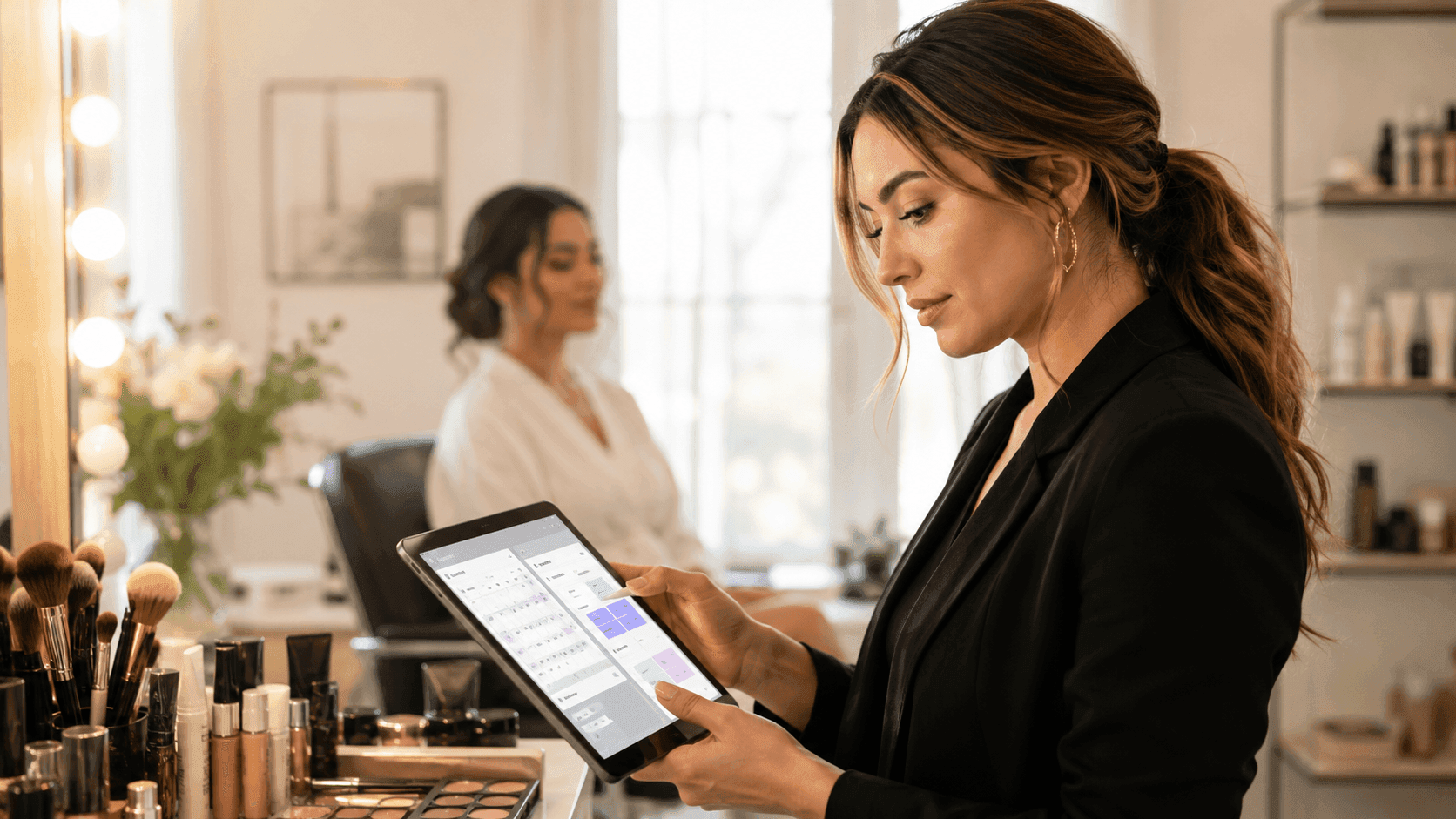
If you are a makeup artist, your phone is probably working harder than you are.
Bridal inquiries at midnight. DMs asking for your availability next Saturday. Clients sending five reference photos with no context. Questions about travel fees, trial policies, and whether you do airbrush. Follow-ups you meant to send three days ago. Instagram comments that need a reply before the algorithm buries them.
You did not become a makeup artist to be a full-time receptionist. But right now, a huge part of your business runs through messages — and every unanswered DM is a booking you might lose.
That is exactly why makeup artists are searching for AI receptionists, AI booking assistants, and Instagram AI agents in 2026. Not to replace their artistry. To handle the constant front-desk work that happens on phones, in DMs, and across booking platforms — so they can focus on clients, creativity, and actually making money.
This guide breaks down what those tools actually do, how to use them without sounding robotic, and how to bring reception, booking, intake, and communication into one workflow instead of five scattered apps.
Why Makeup Artists Need This More Than Most Beauty Pros
Makeup artists face a unique combination of pressures that make AI reception and booking especially valuable:
Event-driven, high-stakes bookings. Bridal and event makeup is not a casual appointment. Clients research for months, compare portfolios, and need detailed answers before committing. A slow reply can mean losing a $2,000+ wedding booking to someone who responded faster.
Complex scheduling. Bridal trials, wedding-day timelines, bridal party coordination, travel, early call times, and touch-up windows do not fit a simple "pick a time slot" flow. Booking conversations are long and detailed.
Visual-heavy inquiries. Clients send inspiration photos, ask "can you recreate this?", and expect you to understand their vision before they book. That requires context, not a generic auto-reply.
Social media as the front door. For many makeup artists, Instagram is not just marketing — it is where inquiries start. You need something that supports both discovery and conversion, not just a calendar link dropped in your bio.
Solo operator reality. Most makeup artists do not have a front desk team. You are the artist, the scheduler, the invoicer, and the customer service department — often while doing someone else's makeup.
An AI receptionist and booking assistant does not replace you. It handles the repeatable parts of those conversations so you can step in when judgment, empathy, or artistry actually matter.
What an AI Receptionist Does for Makeup Artists
An AI receptionist is not a phone tree from 2005. For modern makeup artists, it means an intelligent assistant that can handle incoming inquiries across the channels where clients actually reach you.
Answering Common Questions Instantly
Most makeup artist inquiries fall into predictable categories:
- "Are you available on [date]?"
- "What are your rates for bridal makeup?"
- "Do you travel? How far?"
- "Do you require a trial?"
- "What's your deposit policy?"
- "Can you do [specific look]?"
- "Do you have openings for my bridal party?"
An AI receptionist drafts accurate, professional replies based on your actual services, policies, and availability — so you are not rewriting the same answers every week.
Qualifying Leads Before You Invest Time
Not every inquiry is a good fit. AI can help you:
- Ask the right qualifying questions upfront (date, location, party size, budget range)
- Flag high-priority bookings (wedding dates, large parties, destination work)
- Identify inquiries that need your personal attention vs. ones that can be handled automatically
- Route complex bridal conversations to you with context already gathered
This alone saves hours. Instead of a 20-message back-and-forth to learn basic details, you open a conversation that already has the information you need.
Maintaining Your Voice and Brand
The biggest fear makeup artists have about automation is sounding generic. That is a valid concern — and it is why generic chatbots fail.
The best AI receptionist tools for beauty professionals are trained on your business context: your services, your tone, your policies, your portfolio positioning. You review and edit responses rather than sending robotic templates. Over time, the assistant learns how you communicate — warm but professional, detailed but not overwhelming.
ProBeauty AI is built specifically for this. It is not a blank ChatGPT window where you paste the same prompt every time. Your services, booking rules, and client context live inside the platform, so responses reflect your actual business.
What an AI Booking Assistant Does
A booking assistant goes beyond answering questions — it moves clients toward an actual appointment on your calendar.
24/7 Booking Without the Back-and-Forth
Clients want to book when they are thinking about it — often late at night after scrolling wedding inspiration or event photos. If booking requires waiting for your reply during business hours, you lose momentum.
An AI booking assistant can:
- Share available dates based on your real calendar
- Explain service options and time requirements
- Collect event details during the booking flow
- Send confirmation and prep instructions automatically
- Handle rescheduling requests with your policies built in
For bridal work, this is especially powerful. A bride who finds you on Instagram at 10pm can start the booking process immediately instead of sending a DM and hoping you reply tomorrow.
Deposits, Contracts, and Commitment
Makeup artists lose significant revenue to last-minute cancellations and no-shows — especially around weddings and events. An AI booking assistant integrated with your policies can:
- Require deposits before confirming high-demand dates
- Send contract reminders automatically
- Explain cancellation terms clearly before booking
- Flag unpaid balances before event day
Reducing no-shows matters even more for event makeup because dates are fixed. You cannot easily fill a cancelled wedding slot the way you can a regular salon appointment.
Bridal Party and Group Coordination
Booking a bridal party is not one appointment — it is a project. An AI booking assistant helps you:
- Collect details for each person in the party
- Coordinate trial and wedding-day timelines
- Track who has paid deposits and who has not
- Send group reminders without manual texting
If you run a bridal beauty business, this kind of coordination is the difference between looking amateur and running a premium service.
Instagram AI Agent: Turning DMs Into Bookings
Many of the fastest-growing search queries around beauty AI are specifically about Instagram — and for good reason. Instagram is where makeup artists get discovered, and DMs are where bookings begin.
An Instagram AI agent (or an AI assistant that supports your Instagram workflow) helps with:
DM response drafting. Reply to inquiries faster with on-brand messages you can send or edit in seconds.
Comment engagement. Draft thoughtful replies to comments on your posts — especially on transformation content and bridal work.
Caption and content support. Write captions, hashtags, and Reel descriptions so you post consistently without spending an hour on every post. See our full guide on AI tools for makeup artists for the broader content workflow.
Inquiry-to-booking handoff. When a DM conversation is ready to convert, the AI helps move it toward your booking link, intake form, or consultation — instead of letting hot leads go cold in your message requests folder.
The goal is not to auto-pilot your entire Instagram presence. It is to remove the friction between someone discovering your work and actually getting on your calendar.
Client Questionnaires and Intake Forms
Another rising search trend: makeup artists looking for the easiest way to create and send questionnaires to clients.
This makes sense. Before a bridal trial or event booking, you need information — skin type, allergies, inspiration photos, event details, hair plans, photography timeline, and more. Collecting that over DM is messy. Collecting it on a phone call takes time you do not have.
Digital intake forms solve this — and AI makes them faster to build and customize.
What to Include in a Makeup Artist Intake Form
For all clients:
- Contact information and event date
- Service requested
- Skin type and known sensitivities
- Allergies and current skincare/medications
- Inspiration photos upload
- How they found you
For bridal clients:
- Ceremony and reception locations
- Getting-ready timeline
- Bridal party size
- Trial date preference
- Hair stylist and photographer contact info
- Coverage expectations (natural, soft glam, full glam)
For photoshoot and commercial work:
- Creative direction references
- Call time and location
- Usage rights and billing contact
- Team contacts (photographer, creative director)
AI can generate these forms from a simple description — "bridal makeup intake form with trial and wedding-day sections" — and customize them for your brand. Clients complete them before the appointment, so you show up prepared.
Learn more in our guide to digital intake forms for beauty professionals.
AI Makeup Previews and Visual Consultations
Some searches are also emerging around AR beauty effects and AI image tools that help makeup artists show clients potential looks without manual retouching.
This is a different category from reception and booking — but it connects directly to the consultation process that happens before someone commits.
What visual AI tools can do:
- Generate realistic makeup look previews from client photos
- Compare soft glam, natural, editorial, and bridal directions
- Create mood boards for trials and event planning
- Support content creation for your portfolio and social media
When a client asks "can you do something like this?" and sends a photo, an AI preview helps you align on expectations before the trial — reducing mismatches and bad reviews.
For permanent makeup artists specifically, consultation AI is even more critical. Clients need to understand healing, color shifts, and realistic outcomes before a semi-permanent procedure. Documented consultations with visual references protect both you and the client.
How This Fits Together: One Platform vs. Five Apps
The fragmented approach most makeup artists use today looks like this:
- ChatGPT for writing DM replies
- Instagram for discovery and inquiries
- A separate booking app for scheduling
- Google Forms or PDFs for intake
- Canva or another tool for visuals
- Notes app for client details
- Calendar for wedding-day timelines
Each tool works in isolation. None of them know your services, your clients, or your policies unless you manually connect the dots every time.
That is the problem an integrated beauty platform solves.
ProBeauty AI brings AI chat, booking, client records, intake forms, image templates, reminders, and marketing support into one place built for beauty professionals — not a generic AI chatbot you have to train from scratch every session.
As we covered in ChatGPT vs. ProBeauty AI, the advantage is not one model. It is the workflow: booking at the center, AI supporting every step, and the right tool for each job without app-switching.
"Won't Clients Know It's AI?"
Honest answer: they might, if you use it badly.
Clients do not mind efficiency. They mind feeling ignored, getting wrong information, or receiving obviously copy-pasted responses that do not address their question.
Best practices for makeup artists using AI reception and booking:
Always review before sending on high-stakes inquiries. Bridal bookings, pricing negotiations, and complaint messages deserve your eyes.
Use AI for drafting, not autopilot. The assistant writes the first draft; you add the human touch.
Be transparent when appropriate. "I'll get back to you within 24 hours with availability" is better than a instant wrong answer.
Keep personal moments personal. Thank-you messages after a wedding, follow-ups about how their photos turned out, referral requests — these should sound like you, not a bot.
Set clear response time expectations. AI helps you reply faster, but setting boundaries ("I respond to inquiries within 24 hours") protects your sanity.
The makeup artists who use AI well are not hiding it. They are using it to show up more consistently and professionally than they could alone.
How to Get Started
You do not need to automate everything on day one. Start with the pain point costing you the most bookings.
If You Lose Leads to Slow Replies
Start with AI-assisted DM and inquiry responses. Draft replies faster, answer common questions consistently, and never leave a bridal inquiry sitting unread for two days.
If Your Booking Process Is Messy
Start with an AI booking assistant connected to your calendar, deposits, and policies. Make it easy for clients to book from Instagram, your website, or a direct link.
If You Spend Too Long on Admin Before Appointments
Start with digital intake forms. Send them automatically when someone books, and review client details before the trial or event.
If Clients Struggle to Communicate What They Want
Start with AI makeup preview tools and structured consultation workflows. Align on the look before you pick up a brush.
The Bottom Line
Makeup artists in 2026 are not searching for AI because they want to replace their craft. They are searching because the business side of makeup artistry — reception, booking, intake, follow-up, Instagram — has outgrown what one person can manage alone.
An AI receptionist answers faster. A booking assistant converts more inquiries. An Instagram AI agent keeps your content and DMs from falling behind. Questionnaires and intake forms prepare you for every appointment. Visual AI tools align expectations before the trial.
You bring the artistry, the judgment, and the human connection. AI handles the rest — so more of the right clients find you, book you, and come back.
ProBeauty AI gives makeup artists AI chat, smart booking, digital intake forms, client records, image templates, reminders, and marketing support in one platform — built specifically for beauty professionals. Get started free.