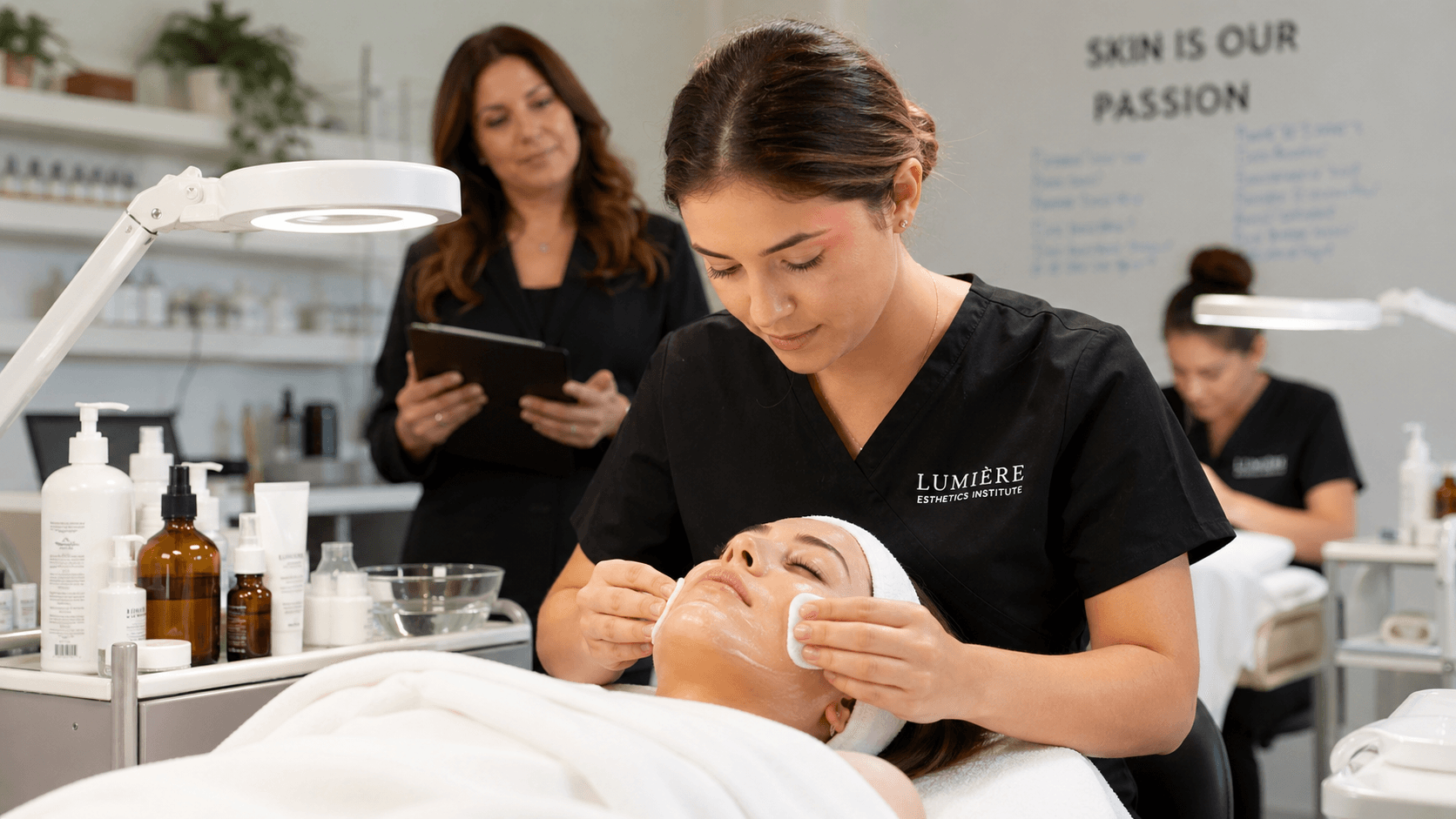
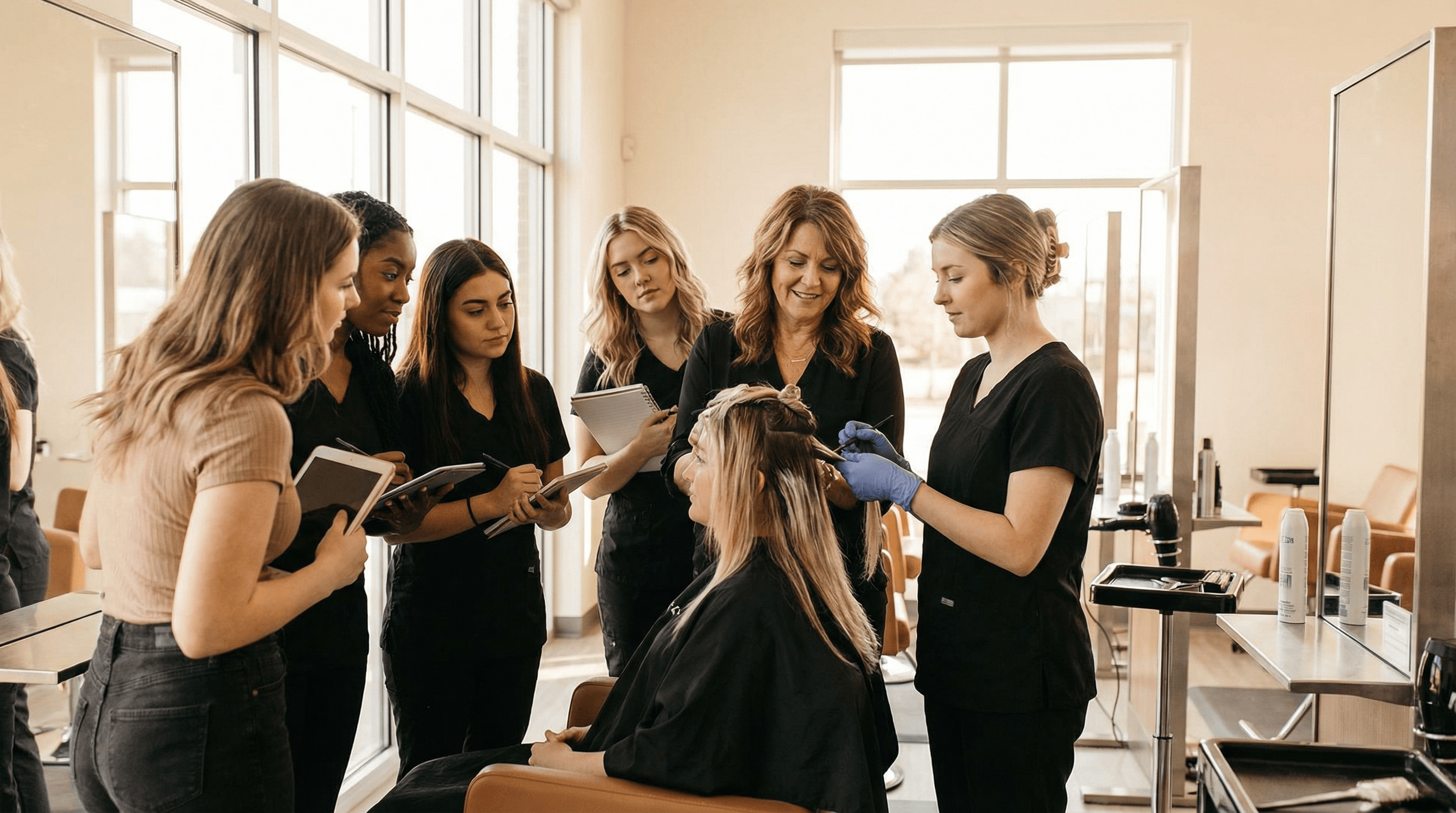
If you've ever wondered whether you could turn your love of skincare into a career, the answer is yes — and there's never been a better time to become an esthetician.
The skincare industry is booming. Demand for skilled estheticians is growing faster than most professions, driven by an aging population, increasing awareness of skin health, and a cultural shift toward self-care and wellness. Beauty industry employment is projected to grow 17-19% over the next decade — significantly faster than the average for all occupations.
But becoming an esthetician isn't just about loving skincare. It requires real education, licensing, business skills, and a willingness to work hard. This guide walks you through everything you need to know to start your esthetics career — and build it into something that pays off financially and personally.
What Does an Esthetician Actually Do?
Before committing to this career, get clear on what the day-to-day actually looks like.
Core Services Estheticians Provide
Skin treatments:
- Facials (basic, deep cleansing, anti-aging, acne)
- Chemical peels
- Microdermabrasion
- Microneedling
- LED light therapy
- Extractions
Hair removal:
- Waxing (face and body)
- Sugaring
- Threading (in some states)
Other services (depending on training):
- Lash and brow tinting
- Lash extensions
- Brow shaping and microblading (with additional certification)
- Body treatments (scrubs, wraps)
- Makeup application
Education and consultation:
- Skincare consultations and analysis
- Product recommendations
- Aftercare instructions
- Long-term treatment planning
What Estheticians Don't Do
Important distinctions:
- Medical procedures — Botox, fillers, laser treatments require medical licensing or work under physician supervision (medical estheticians)
- Diagnosis — You can identify skin conditions but not diagnose them
- Prescription products — Recommendations are limited to OTC products
- Cosmetology services — Hair cutting, coloring, and styling require a separate license
The exact scope varies by state, so research your specific state board's regulations.
A Typical Day
What an esthetician's day actually looks like:
- 6-8 client appointments, varying in length (30 min to 2+ hours)
- Setup and breakdown between appointments
- Client consultations and intake
- Documentation and notes
- Product recommendations and retail sales
- Cleaning and sanitation throughout the day
- Marketing and social media (if independent)
- Continuing education and skill development
It's physical work. You're on your feet, often leaning over clients, using your hands constantly. It's also rewarding work — you genuinely transform how people feel about themselves.
Step 1: Research Your State's Requirements
Esthetician licensing requirements vary significantly by state. Before anything else, research your specific state's regulations.
What to Look Up
Education hours required: Most states require 600-1,500 hours of training. Some examples:
- California: 600 hours
- New York: 600 hours
- Texas: 750 hours
- Florida: 260 hours (one of the lowest)
- Washington: 750 hours
- Massachusetts: 600 hours
Curriculum requirements: What topics must be covered (anatomy, sanitation, treatments, business)
Examination requirements: Most states require both written and practical exams
Continuing education: Many states require ongoing education to maintain your license
Scope of practice: What treatments you're legally allowed to perform
License reciprocity: If you're licensed in one state, can you transfer to another?
Where to Find This Information
- Your state's cosmetology or esthetics board website (most authoritative source)
- The National Interstate Council of State Boards of Cosmetology (NIC)
- Schools you're considering — they should know their state's requirements thoroughly
Don't skip this step. Some students enroll in programs only to discover they don't meet their state's requirements. Verify before you commit.
Step 2: Choose the Right Esthetics Program
Your education shapes your career. Choose carefully.
Types of Programs
Traditional cosmetology schools:
- Comprehensive programs with full facilities
- In-person hands-on training
- Typically 6-12 months full-time
- Cost: $5,000-$15,000
Specialized esthetics schools:
- Focused exclusively on esthetics (no hair or nail training)
- Often more advanced techniques covered
- Better networking with esthetics-specific employers
- Cost: $4,000-$12,000
Community colleges:
- Often the most affordable option
- May include broader education (general courses)
- Longer timelines (sometimes 1-2 years)
- Cost: $3,000-$8,000
Career and technical schools:
- Faster, focused programs
- Practical skills emphasis
- Generally affordable
- Cost: $4,000-$10,000
What to Look for in a Program
✅ State board approval — Required to qualify for licensing exams
✅ High pass rates — Look for schools with 80%+ first-time state board pass rates
✅ Comprehensive curriculum — Covers theory, hands-on practice, and business skills
✅ Modern technology integration — Schools using AI tools, digital systems, and current industry technology
✅ Industry-current education — Are they teaching the latest techniques and trends?
✅ Hands-on practice opportunities — Clinic with real clients beats just mannequins
✅ Career support — Job placement, portfolio development, networking
✅ Flexible scheduling — Day, evening, weekend options if you're working
✅ Financial aid options — Grants, loans, payment plans
Questions to Ask Schools
When you tour or interview programs:
- What's your state board pass rate?
- What products and equipment do students train with?
- How much hands-on time do students get with real clients?
- What business and marketing education is included?
- What's your job placement rate?
- Can I speak to recent graduates?
- What does the typical day look like?
- What's the student-to-instructor ratio?
Red Flags
❌ Pressure to enroll immediately — Reputable schools let you take your time
❌ Vague answers about pass rates or job placement
❌ Outdated equipment that doesn't reflect industry standards
❌ No clinic experience — You need to work on real clients before graduation
❌ Excessive costs without clear value justification
❌ Negative reviews from current or former students
Step 3: Complete Your Education
Once you're enrolled, set yourself up for success.
Make the Most of Your Training
In the classroom:
- Take detailed notes — you'll reference them throughout your career
- Ask questions, even if they seem basic
- Review material regularly, not just before tests
- Form study groups with serious classmates
In practical training:
- Practice every technique multiple times
- Take photos of your work (with permission) to build a portfolio
- Welcome critique — it's how you grow
- Be the student instructors remember as someone who tries hard
In clinic experiences:
- Treat every client like a paying client
- Get comfortable with consultations and communication
- Document everything for your portfolio
- Build relationships with clients who might follow you to your future business
Build Skills Beyond the Curriculum
Standard programs cover the basics. To stand out, develop additional skills:
Technical specialization:
- Acne treatment expertise
- Anti-aging and corrective skincare
- Sensitive skin and rosacea
- Specific equipment expertise (microcurrent, LED, ultrasonic)
Business skills:
- Social media and content creation
- Pricing strategy
- Client communication and retention
- Digital tools and technology
Soft skills:
- Active listening
- Professional communication
- Conflict resolution
- Time management
Start Building Your Network
Before graduation:
- Connect with classmates who are serious — they'll be your future colleagues and referral sources
- Build relationships with instructors who can mentor you
- Attend industry events and trade shows
- Follow successful estheticians on social media
- Connect with product reps who often know about job openings
Step 4: Pass Your State Board Exam
The state board exam is the gateway to your career.
Understanding the Exam
Most states require two exams:
Written exam:
- Multiple choice questions
- Covers theory, anatomy, sanitation, regulations
- Typically 75-100 questions
- 2-3 hours to complete
Practical exam:
- Demonstrate hands-on skills
- Specific procedures graders evaluate
- Sanitation and safety are heavily scrutinized
- Time-limited (usually 2-4 hours)
Preparing Effectively
Use multiple study methods:
- Practice exams (especially AI-powered simulators)
- Flashcards for terminology
- Study groups
- Review courses if available
Practice the practical:
- Time yourself doing procedures
- Have classmates evaluate your sanitation practices
- Review the exact rubric your state uses
- Eliminate small mistakes that cost points
Manage exam-day anxiety:
- Get good sleep the night before
- Arrive early to settle in
- Bring all required supplies and ID
- Read questions carefully (don't rush)
- If you fail, you can retake — most states allow this
Common Reasons People Fail
❌ Underestimating the exam difficulty
❌ Inadequate practical practice
❌ Poor sanitation habits formed in school
❌ Test anxiety affecting performance
❌ Not following exact procedural steps
The good news: with proper preparation, most students pass on their first attempt.
Step 5: Decide Where to Work
Once you have your license, you have multiple career path options.
Employment Options
Spa or salon employee:
- Steady income (hourly + commission)
- Built-in clients and marketing
- Mentorship from experienced professionals
- Less business responsibility
- Lower earning ceiling
Best for: New grads, those who want to focus on craft over business
Booth rental:
- You pay rent, keep service revenue
- More independence than employment
- Some shared environment benefits
- Have to build your own clientele
- Higher earning potential
Best for: Estheticians with some experience and existing client base
Solo practice (suite or own space):
- Complete independence and control
- Highest earning potential
- All business responsibilities are yours
- Need to handle marketing, finances, everything
- Greatest risk and reward
Best for: Experienced professionals with strong business sense
Mobile esthetics:
- Travel to clients' locations
- Lower overhead
- Premium pricing for convenience
- Equipment and travel logistics
- Specific markets (busy professionals, mobility-limited clients)
Best for: Self-starters, specific market niches
Med spa:
- Higher-end clientele and services
- Often best pay in the industry
- Work alongside medical professionals
- Often requires additional certifications
- More medical and clinical environment
Best for: Estheticians interested in advanced treatments and clinical aesthetics
Salary Expectations
Esthetician income varies enormously:
Starting estheticians (employees):
- $25,000-$40,000 annually
- Hourly: $15-$22 plus commission
Experienced estheticians (employees):
- $40,000-$70,000 annually
- Often with significant commission and tips
Booth renters and solo practitioners:
- $50,000-$150,000+ annually
- Highly variable based on clientele and pricing
Med spa estheticians:
- $50,000-$100,000+ annually
- Often higher-paying than traditional spa work
Top earners (specialists, salon owners):
- $150,000-$500,000+ annually
- Requires expertise, business savvy, and time
The path to high income usually involves either becoming a recognized specialist, owning your own business, or both.
Step 6: Build Your Career
Getting licensed is just the starting line. Here's how to build a thriving career.
Your First Year
Focus on:
- Building speed and consistency in services
- Developing your client communication skills
- Learning from experienced colleagues
- Saying yes to extra training and opportunities
- Documenting your work for your portfolio
Avoid:
- Job-hopping too soon (give places at least 6-12 months)
- Comparing yourself to seasoned professionals
- Burning out trying to do everything at once
- Skipping continuing education
Years 2-5
Focus on:
- Specializing in services you love and excel at
- Building your personal client following
- Developing your brand and online presence
- Investing in advanced training and certifications
- Considering whether to stay employed or branch out
Decisions to make:
- Stay at your current location or move to better opportunity?
- Continue as an employee or transition to booth rental/independence?
- Specialize further or stay generalist?
Long-Term Career Growth
Paths to consider:
Specialist track:
- Become known as THE expert in something specific (acne, anti-aging, microneedling, etc.)
- Command premium pricing
- Often write, teach, or speak in addition to services
Business owner track:
Educator track:
- Become a school instructor
- Teach continuing education courses
- Create educational content and courses
- Influence the next generation of estheticians
Industry track:
- Work for product brands as an educator or rep
- Consult for businesses
- Speak at industry events
- Develop products
Med spa track:
- Pursue medical aesthetics certifications
- Work with dermatologists or plastic surgeons
- Specialize in advanced treatments
- Higher earning potential, more clinical work
Continuing Education Throughout Your Career
The estheticians who thrive long-term never stop learning:
- New techniques and modalities
- Advanced treatment certifications
- Business and marketing skills
- Technology and digital tools
- Wellness and adjacent fields
Most states require continuing education for license renewal. Even when not required, ongoing learning is essential to staying current.
Common Misconceptions About This Career
"It's just spa relaxation work"
Reality: Estheticians provide medical-adjacent services with real clinical knowledge required. The depth of skin science, contraindications, and treatment protocols rivals many healthcare fields.
"It's easy money"
Reality: Building a profitable esthetics career takes years. Many new estheticians earn modestly while developing skills, clientele, and business acumen.
"You'll just be applying creams"
Reality: Modern estheticians use sophisticated equipment, advanced techniques, and significant clinical knowledge. The field is increasingly technical.
"AI and technology will replace estheticians"
Reality: AI and technology are tools that help estheticians work more efficiently — they can't replace the hands, eyes, and human connection that define great esthetics work.
"It's not a real career"
Reality: Esthetics is a growing, recession-resistant career with paths to six-figure income, business ownership, and significant professional impact.
Is Becoming an Esthetician Right for You?
Honest questions to ask yourself:
Do you genuinely care about people? This is service work. If you don't enjoy people, this career will exhaust you.
Are you willing to do the physical work? You'll be on your feet, using your hands all day, often for years. Take care of your body.
Can you handle being your own boss? Even employed estheticians need entrepreneurial skills. Independent ones absolutely do.
Are you okay with starting at modest pay? The earning ceiling is high, but most estheticians don't reach it for years.
Do you have patience for slow growth? Building expertise and a client base takes time.
Are you comfortable with continuous learning? This isn't a "set it and forget it" career.
If you can answer yes to most of these, esthetics could be a wonderful career fit.
Your Next Steps
If you're seriously considering this career:
- Research your state's specific requirements thoroughly
- Tour at least 3 esthetics programs and ask hard questions
- Talk to working estheticians about their day-to-day reality
- Consider shadowing or doing client visits at spas to experience the environment
- Think honestly about your finances — Education costs, modest starting pay, the journey to profitability
- Plan your education and licensing timeline — Most students complete programs in 6-12 months
- Start building your professional presence early — Even before graduating, follow industry leaders, build your taste, develop your aesthetic
A Career That Can Change Your Life
Becoming an esthetician isn't easy or quick, but for the right person, it's one of the most rewarding career choices available. You'll work with your hands. You'll work with people. You'll see immediate, visible impact from your work. You'll have the opportunity to build a business that's genuinely yours.
You'll also need to invest in yourself, work harder than you might expect, and play the long game. The estheticians who succeed are the ones who treat their craft seriously, develop business skills alongside technical skills, and stay committed when things get hard.
If that sounds like you, welcome to one of the most beautiful careers in the world.
ProBeauty AI helps estheticians succeed at every stage of their career — from new graduates building their first client base to established professionals running thriving practices. AI-powered booking, client management, and marketing tools designed specifically for skincare professionals. Get started free.